MS Reduces New Outlook Notification Delay, but Classic Outlook Remains Superior
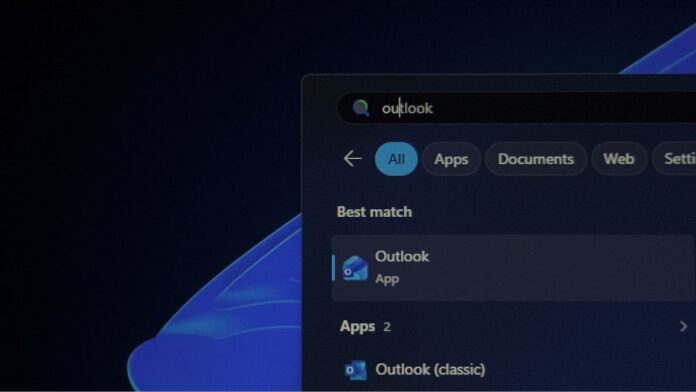
A month ago, we reported that the new Outlook took up to 10 seconds to open an email from a Windows 11 notification, an unacceptable delay for a widely used email client. However, this week, we observed an improvement when clicking on an email notification—it now opens in about half the time.
Previously, clicking a new email notification should have taken users directly to the message. Instead, the new Outlook would open the app, load the inbox, and then make users wait around 10 seconds for the email to appear.
Ironically, manually opening Outlook from the Start menu and selecting the email was faster than using the notification system designed for convenience.
While this behavior is frustratingly typical for MS, the Classic Outlook app never suffered from this issue. Following the widespread coverage of our original article, it seems MS has taken notice and addressed this delay.
New Outlook Notification Emails Now Open in Half the Time
In version 1.2026.713.100 of the new Outlook, the delay has been significantly reduced. Clicking a notification still opens the full app and inbox first, but the specific email now appears in around 5 seconds instead of 10.
MS has not highlighted this improvement as a major feature. The closest acknowledgment in the official changelog is a vague entry from July 1, 2026, stating, “Various fixes to functionality and performance.” Despite the lack of fanfare, the improvement is both noticeable and repeatable in testing.
Performance Comparison: Then vs Now
In our June 22 report, we noted that MS was internally testing fixes for slow notifications but had not committed to a release date. Later that month, MS introduced grouped notifications to reduce spam but remained silent on addressing load times. By the time of our coverage on the Quick Parts rollout, the delay issue was still unresolved. The fix appears to have been quietly deployed since then.
Outlook Classic Remains the Benchmark
While reducing the delay by half is commendable, the new Outlook still lags behind. Outlook Classic opens the correct email instantly when a notification is clicked. In comparison, 5 seconds is still 5 seconds too long.
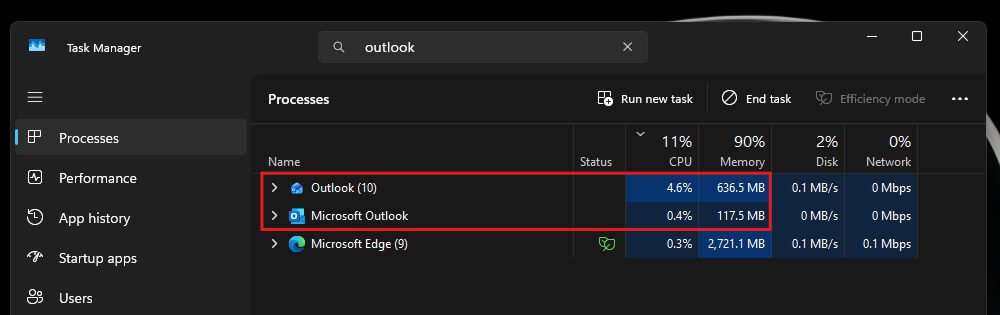
The disparity extends beyond notifications. In June, we reported on the differences in RAM and CPU usage between the two versions:
- New Outlook idles at 490 MB to 636 MB of RAM and around 4% CPU usage.
- Classic Outlook idles at 117 MB to 148 MB of RAM and under 1% CPU usage.
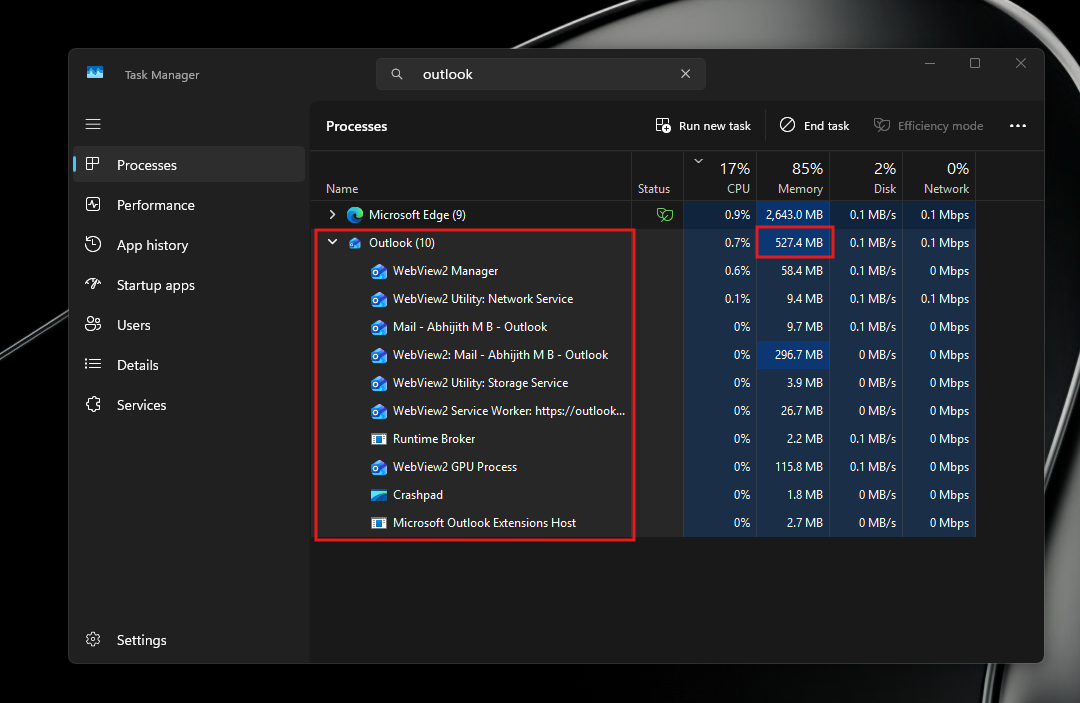
The new Outlook operates as a web app, running 10 separate WebView2-driven processes in Task Manager. This architecture essentially turns it into a browser window, consuming significantly more resources. In contrast, Classic Outlook runs as a single efficient process. The architectural difference is stark.
MS plans to phase out Classic Outlook by 2027, despite user dissatisfaction. Many describe the transition to the new client as “painful” and “frustrating.” Although Classic Outlook will remain supported until at least 2029, MS is pushing for a strong and accelerating adoption of the new version.
Classic Outlook Features Are Being Phased Out
While the new Outlook works to close its performance gap, MS has been integrating Copilot into Classic Outlook instead of adding new features. In mid-July, MS announced that the Copilot “Draft an email message” feature would be force-enabled across all Outlook versions, including Classic, later this year.
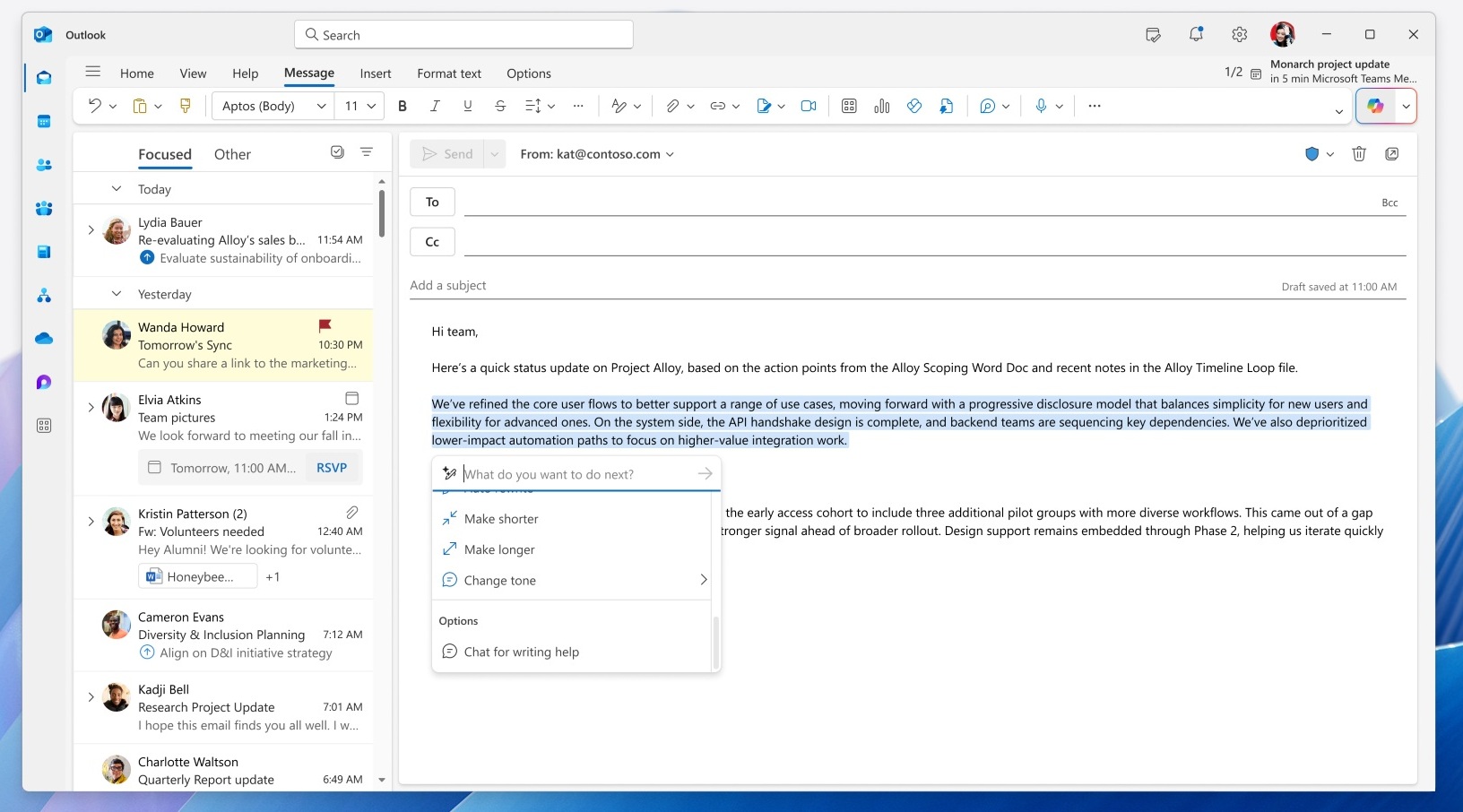
Additionally, Classic Outlook will receive an always-visible Copilot button, similar to the floating button in Word, Excel, and PowerPoint. However, both features require a paid MS 365 Copilot license.
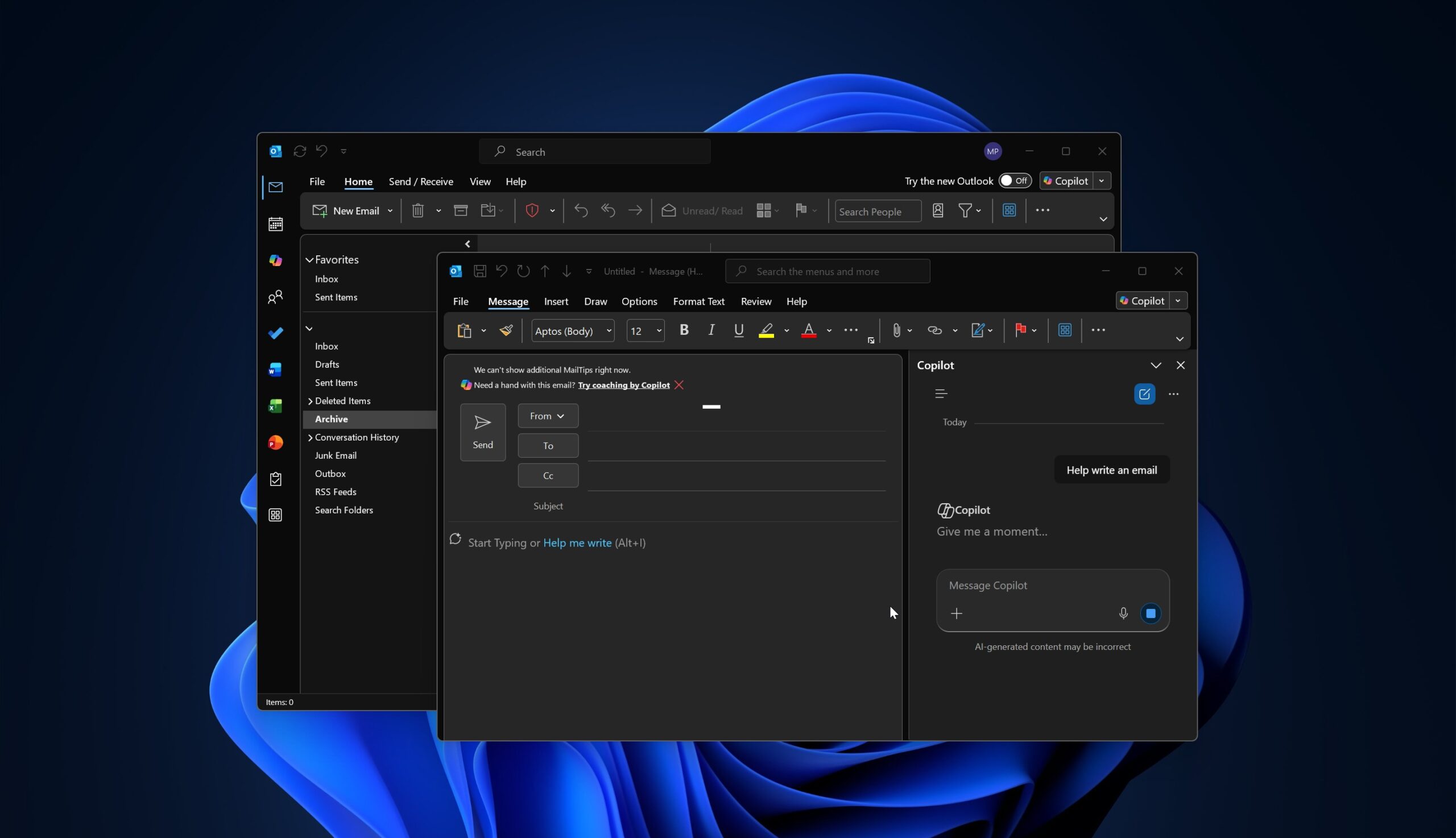
Meanwhile, MS is retiring Classic-only features such as Meeting Insights, which displayed relevant files and emails within a meeting invite. This feature will be replaced by “Prepare for this meeting,” which also requires a Copilot license, leaving non-subscribers without an equivalent tool.
New Outlook Gains Classic Features
While Classic Outlook loses functionality, the new Outlook is gradually incorporating features that long-time Classic users rely on:
- Planner integration began rolling out in mid-July, allowing users to manage tasks alongside email and calendar without switching to Teams.
- Quick Parts, a reusable email snippet tool, became available to all users in early July after limited testing.
- A stale-reply warning, which flags users when responding to an outdated message in a thread, is expected in August.
- Drag-and-drop email categorization is set to debut in September.
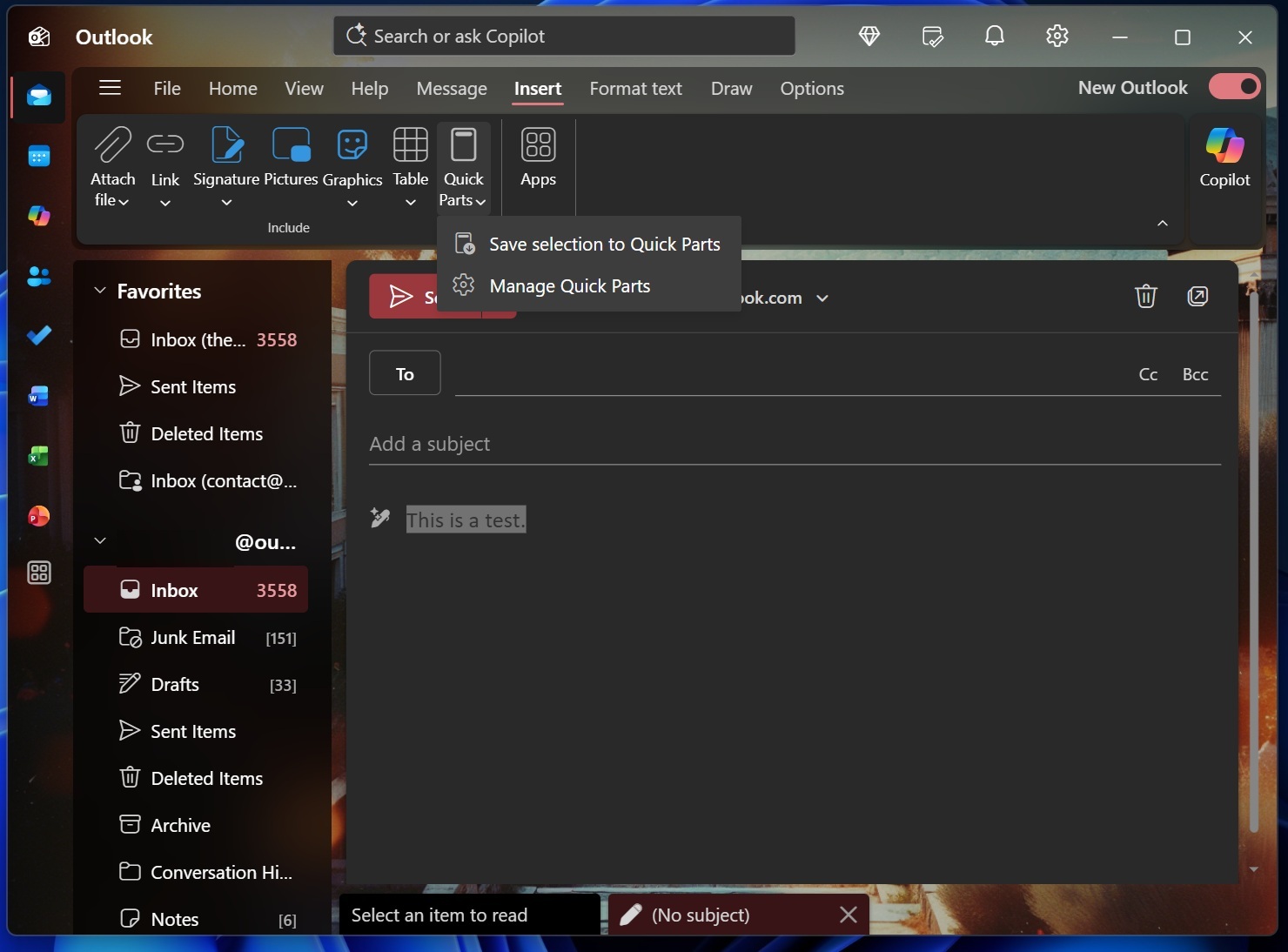
The new Outlook also added support for .PST files, enabling users to import old calendars and contacts from local archives. However, it still relies on Classic Outlook to process .PST files in the background.
Offline support, a historically weak point for the new Outlook, was improved in June to include file attachments—months after being promised by MS. These updates suggest that the new Outlook is closing the feature gap, albeit slowly, while Classic Outlook is increasingly sidelined.
Conclusion: The Future of Outlook
For now, if instant notification response is critical to your workflow, Outlook Classic remains the superior choice. While the new Outlook is making progress, its web-based architecture ensures it will never achieve the same level of performance. MS’s plans to transition users to the new client are inevitable, but for many, the Classic version remains unmatched in speed and efficiency.
Windows Latest depends on readers like you. Make us your Preferred source on Google Discover and Google Search, and help our independent reporting reach more people.