

Windows 11's Market Share Struggles While Windows 10 Nears End of Support
Windows 11's market share has shown limited growth, raising concerns as Windows 10's extended support period is set to end in less than eight months. In Germany, approximately 48% of devices—equating to around 21 million PCs—are still running Windows 10. Notably, this figure represents private households and does not include business environments.
Windows 10 Support Timeline and ESU Details
Windows 10's official support ended on October 14, 2025, unless users opted into the Extended Security Updates (ESU) program. Through ESU, users can continue receiving security updates and minor fixes until October 13, 2026. However, after that date, users will have to either upgrade to Windows 11 or replace their PCs.
German Households’ Reluctance to Upgrade
A report from the EU-based cybersecurity firm ESET highlights that 21 million PCs in German households are still running Windows 10. This excludes business devices, which also tend to favor Windows 10. Despite the looming end of ESU support, many German consumers continue to resist upgrading to Windows 11.
In August 2025, Germany had approximately 24 million Windows 10 devices and 17 million Windows 11 devices. During this period, about 3.6–3.7 million PCs were upgraded, with most of the migration being from Windows 10 to Windows 11.
According to ESET's German report, “MS's current operating system is found on approximately 49.5% (21.5 million) of desktop PCs and notebooks, marking an increase of around 3.6 million compared to August 2025.” Meanwhile, older operating systems like Windows XP and Windows 7 have seen their numbers decline to 840,000, down from about 1 million in August 2025.
“Germany struggles with change, including switching operating systems. Windows 10 remains extremely popular among Germans compared to other countries worldwide. Official support ended in October 2025. Anyone who delays the switch further or doesn’t upgrade to extended support is walking a tightrope,” warns Alexander Opel, IT security expert at ESET.
Why Easy ESU Enrollment May Hinder Windows 11 Adoption
One reason for the slow adoption of Windows 11 could be the ease of signing up for Windows 10 ESU. The Windows Update page, which alerts users about the end of support, also provides a simple option to enroll in ESU. As demonstrated in the screenshot below, users just need to click on “Enroll now” and accept the terms.
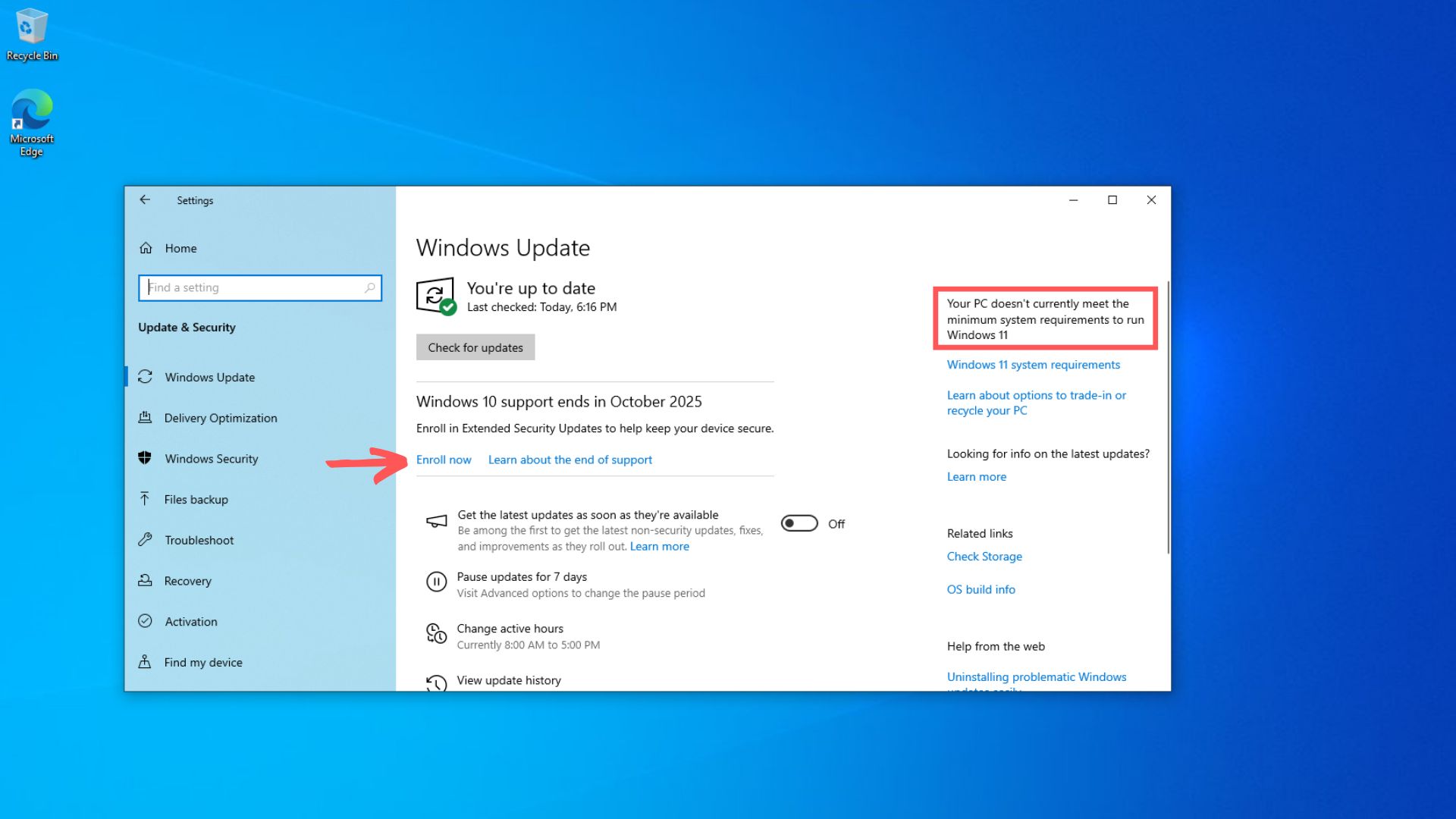
Activating Windows 10 ESU takes less than a minute if users already have a MS account, which many households do. However, MS emphasizes that extended support is only a temporary solution; after October 2026, no security updates will be provided for Windows 10, even with ESU.
To encourage upgrades, MS may soon introduce full-screen notifications, reminding users to move on from Windows 10 and consider purchasing a new Copilot+ PC, especially if their current hardware does not support Windows 11.
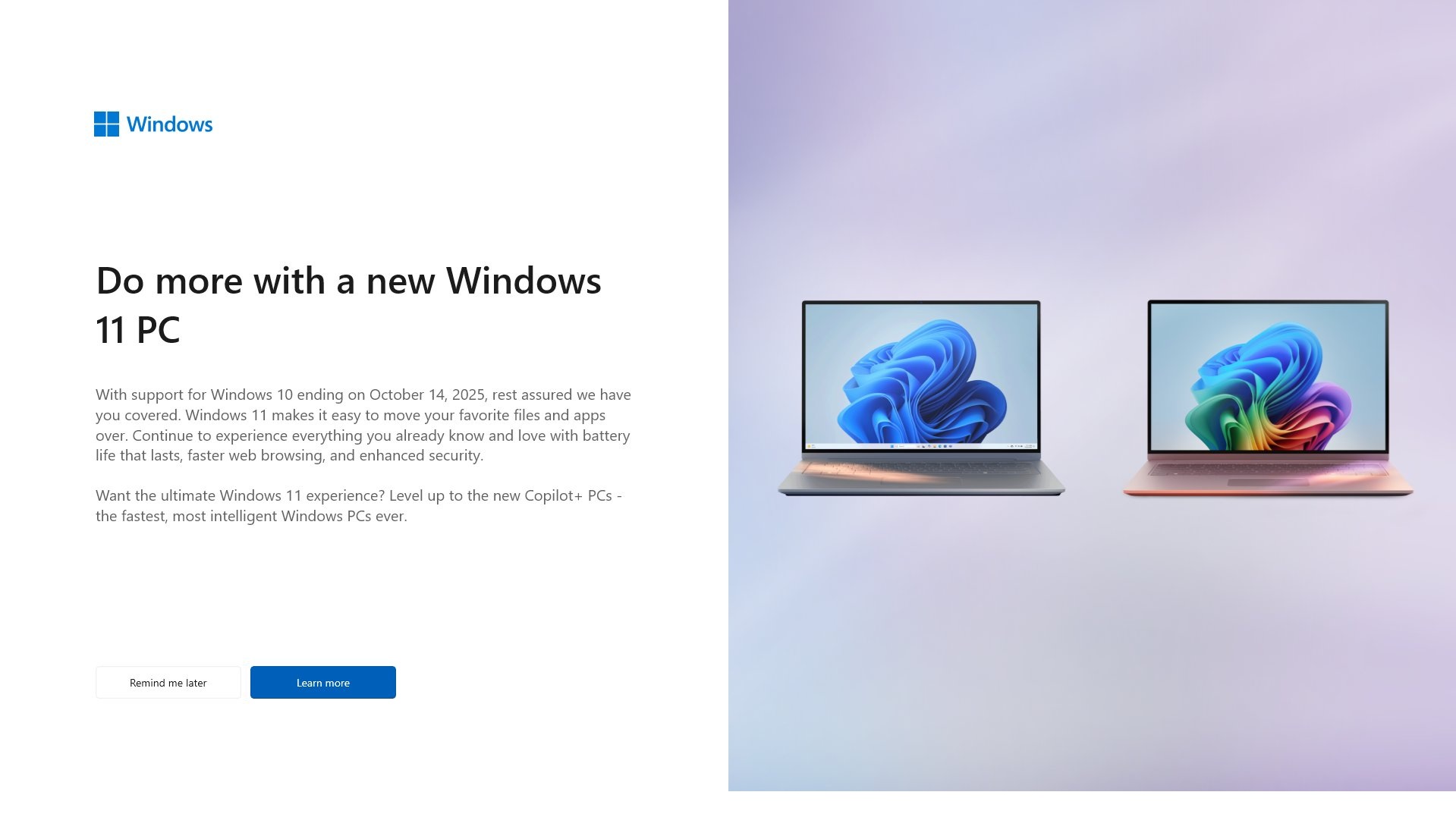
MS even recommends recycling older PCs and using the proceeds to invest in a new Copilot+ PC for a smoother Windows 11 experience.
Windows 11 Gains Popularity Among Gamers
While Windows 11 adoption in Europe remains uncertain, data from Steam's December 2025 survey sheds light on its performance among gamers. According to the survey, 94.23% of Steam users prefer Windows as their operating system, with Windows 11 now holding the majority share at 66.60% (up 1.01 points). Meanwhile, Windows 10 usage has dropped to 27.51% (down 1.55 points).
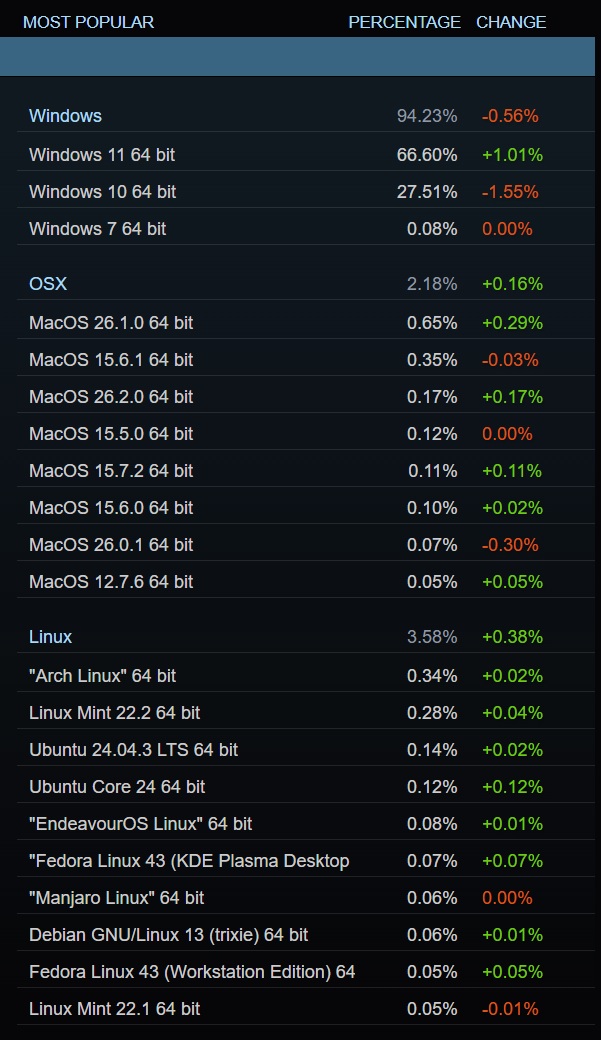
Windows 7 has nearly disappeared from Steam’s data, representing just 0.08% of users. When isolating Windows PCs from the total surveyed (excluding macOS and Linux), Windows 11 accounts for approximately 71% of the total Windows share. This indicates that most gamers who can upgrade have already transitioned to Windows 11.
Methodology: Windows 11's share among Windows PCs is calculated as (Windows 11 share of all PCs) ÷ (Windows share of all PCs), which equals 66.60 ÷ 94.23 = 70.68% (rounded to 71%).
Windows 11’s popularity among gamers is understandable, as it offers better performance through newer drivers, scheduling improvements, and optimized features, even if it feels more resource-intensive than its predecessor.
What About You?
Have you upgraded to Windows 11? If so, what motivated you to make the switch? If you are still using Windows 10, what’s holding you back? Share your thoughts in the comments below.
As for me, I use both Windows 10 and Windows 11. Personally, I still prefer Windows 10 because it feels faster and allows me to pin the taskbar to the top.