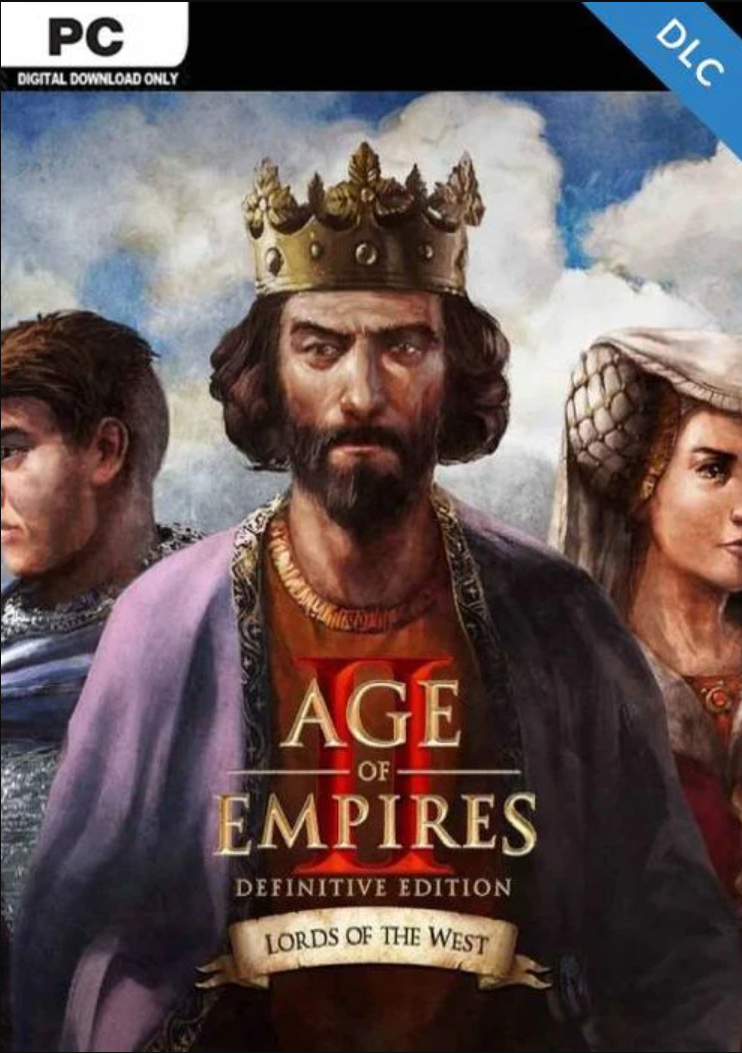
Age of Empires II: A Timeless Paradox of Simplicity and Depth
Real-time strategy games—from the breakneck intensity of professional StarCraft to the dense, lore-heavy world of Total War: Warhammer—can give the impression that the entire genre is built on opaque, systems-driven time sinks. In many cases, it takes hours of study on community wikis just to decipher how the menus function.
A Deliberate Departure from Complexity
By contrast, Age of Empires II stands out with its straightforward, pared-down mechanics. There are only four resources—wood, gold, food, and stone—and its “research tree” consists entirely of tangible, material upgrades for military units and agricultural infrastructure. In other acclaimed RTS titles, expanding your empire might require fine-tuning citizen wages or implementing an entirely new form of government. In Age of Empires II, you build a wheelbarrow.
Boundless Strategic Variety Within Minimalist Design
Yet despite this apparent simplicity, no two matches or campaigns ever play out identically. The scope for strategic experimentation remains vast. While Stronghold and Medieval: Total War may resemble Age of Empires II in surface mechanics, its true kinship lies elsewhere—perhaps with Portal or the original Resident Evil 4: games that equip players with a tightly constrained set of tools (blue and orange portals; gun, knife, and grenade) and challenge them to adapt those tools to increasingly complex scenarios.
It takes roughly ten minutes to learn how to play Age of Empires II. But because each mission introduces new premises and narrative twists—such as building a thriving town on a map with no lumber while repelling waves of enemy cavalry—the experience retains remarkable depth and unpredictability, even for players who have been engaged since its 1999 debut.
The Secret of Its Longevity
Now 27 years old, the game’s endurance stems partly from expansion packs, the 2013 HD Remaster, and the 2019 Definitive Edition. Yet its sustained popularity—averaging around 28,000 concurrent Steam users daily, more than the combined player counts of the Definitive Editions of Age of Empires III and IV—is rooted in something deeper: its visual design, its evocative soundtrack, and Ensemble Studios’ masterful fusion of historical fidelity with high-stakes drama in its superbly written campaigns. Compared to many of its RTS peers, the true beauty of Age of Empires II resides not in its core mechanics—but in everything surrounding them.
Cosy Strategy: A Genre-Bending Contradiction
In an era where “cosy games”—titles that evoke peace, comfort, or the quiet satisfaction of crafts and hobbies—have gained widespread recognition, Age of Empires II occupies a unique space. Though its nominal objective is training armies and pillaging rival nations, its aesthetic and gameplay rhythm often feel more like model-building or diorama creation: a deeply tactile, “cosy” act of creativity.
Thanks to the fastidious detail in unit animations and architecture—and the natural splendour of mission maps, with their mist-shrouded forests, winding rivers, and snow-draped plains—one of the game’s greatest pleasures lies in ignoring objectives altogether and instead pouring resources into designing idyllic medieval settlements.
Once you’ve erected a monastery, a fishing village, and a row of timber-framed houses, the game begins to blur genres: part strategy title, part city builder—a subtle bridge between the all-out warfare of Warcraft and Command & Conquer, and the pastoral serenity of Stardew Valley and Animal Crossing. You can simply sit and watch individual villagers move purposefully about their tasks, accompanied by the soothing, rhythmic chop-chop of axes echoing through the forest. War is inevitable—but the world of Age of Empires II, teeming with deer, birds, and natural wonders, offers rich terrain for exploration and contemplation beyond combat.
Sound as Storytelling: Scale, Grandeur, and Emotional Weight
That sense of scale and grandeur—the feeling that you’re laying the municipal and cultural foundations of human history, not merely tearing them down—is powerfully amplified by Stephen Rippy’s score. Tracks such as “Shamburger” and “T Station” (notable for their enigmatic, non-sequitur titles) employ authentic medieval instrumentation and slow, emergent melodies to lend mystique and gravity to even minor achievements: the hopeful lilt of a wooden flute underscoring the launch of a fishing boat; the ominous thud of tribal drums deepening the foreboding of an impassable cliff face.
The broader sound design—dozens of distinct audio cues signaling troop recruitment, battle onset, or a villager’s arrival (“hee-haa”)—serves both practical and thematic ends. It reinforces the idea that these seemingly disparate moments in your empire’s timeline are, in fact, interwoven movements of a single, grand composition. As you train knights, sow crops, and defeat enemies, you generate an unusual kind of music: overlapping chimes, pops, and alerts coalescing into a literal rhythm of progress.
History Through Intimate Eyes
Beyond the battlefield, Age of Empires II offers a uniquely human perspective on history—one that shifts fluidly from sweeping geopolitical narratives to the intimate experiences of individuals. Attila’s campaign is narrated by a Frankish monk, traumatized by the Huns’ brutal tactics. The story of Saladin and the Saracen Empire unfolds through the voice of a nameless Norman knight, lost and disoriented in the Egyptian desert during the Crusades.
Ensemble Studios goes to extraordinary lengths to preserve factual accuracy: the third mission of Joan of Arc’s campaign features faithful recreations of the castles of Jargeau, Meung-sur-Loire, and Beaugency—fortresses captured by the French during the 1429 Loire Campaign. Yet this meticulous historicism is balanced by stirring voice performances and cinematic cutscenes steeped in the melodrama of national myth. Consider the opening line of the Genghis Khan campaign: “A blue wolf took as his spouse a fallow doe. They settled at the head of the Onon River to raise their offspring. And there were born the Mongols.” You absorb real history—but wrapped in bold, unforgettable tales of adventure.
The Unflinching Weight of Violence
Nearly three decades after release, one of the game’s most striking qualities is its unvarnished portrayal of violence—the tragedy and brutality woven into every mission. All RTS games involve mass casualties—thousands of enemy troops and civilians killed, thousands of your own sacrificed. But in Age of Empires II, where so much time is spent nurturing fledgling towns and meticulously organizing armies and villagers, the impact of death and destruction hits with heightened emotional force.
The first hour of a campaign mission might be devoted to arranging knights into tactical divisions, assigning each group monks for healing and repair workers for battlefield maintenance. One misjudged offensive later, all that remains of that carefully assembled brotherhood are their skeletons—and the skeletons of their horses—slowly sinking into blood-soaked earth.
Victory carries its own moral weight: CPU opponents frequently fight to the last unarmed civilian, compelling you to erase entire cities from the map to claim victory. The savagery of triumph becomes just as difficult to reconcile as the bitterness of defeat.
Environmental Consequences and the Sound of Ruin
You also confront the consequences of environmental devastation. Each mission begins with lush, untouched forests. By the time you’ve constructed barracks, archery ranges, and trebuchet batteries, the landscape is reduced to yellowed wasteland, pockmarked by dead stumps. Overwork a farmland patch, and you’ll hear sand slipping through fingers—a stark audio cue signaling that fertile soil has been ploughed into dust.
Destroy a rival nation’s Wonder—a cathedral or marble temple—and a lightning crack echoes across the map, implying an act of devastation so profound it will resonate across epochs. In a genre that traditionally glorifies total annihilation, this layered depiction of violence—against both people and the natural world—is yet another reason Age of Empires II remains a wonder in its own right.
A Modern Anomaly in a Fading Genre
As of 2026, RTS games remain largely out of favour—outside of remasters, rereleases, and modest nostalgia-driven efforts. Their decline relative to their 1990s heyday may stem in part from over-specialization: the real-time strategy canon grew increasingly dense and systems-driven until only die-hard devotees could keep pace.
Against that backdrop, Age of Empires II—approaching 30 years old in an industry where longevity is rare—feels startlingly modern. Its accessibility, its rich blend of tones, timbres, and styles of play, and its enduring emotional resonance suggest that the RTS genre is far from obsolete. Instead, it still holds swathes of uncharted territory, waiting only for the right vision to uncover it.
This article originally appeared in issue 422 of Edge Magazine. For more just like this, consider subscribing to get the full magazine delivered to your door every month.